Climbing Kilimanjaro on the Marangu Route: A Beginner’s Guide
Climbing Kilimanjaro on the Marangu Route: A Beginner’s Guide
Standing on the roof of Africa is a dream for a lot of people. The good news is that you don’t need climbing skills or ropes to do it. Kilimanjaro is a long, steady trek. What you do need is patience, good preparation and the right route.
For many first-timers, that route is Marangu.
What makes the Marangu Route different?
Marangu is the oldest and best-known route on Kilimanjaro. It’s sometimes called the “Coca-Cola route” because it used to be seen as the easy option. That name is a bit misleading. The summit night is just as hard as on any other route.
What really sets it apart:
- You sleep in huts, not tents. It’s the only route with shared huts and bunk beds. That’s a big plus in the rainy months.
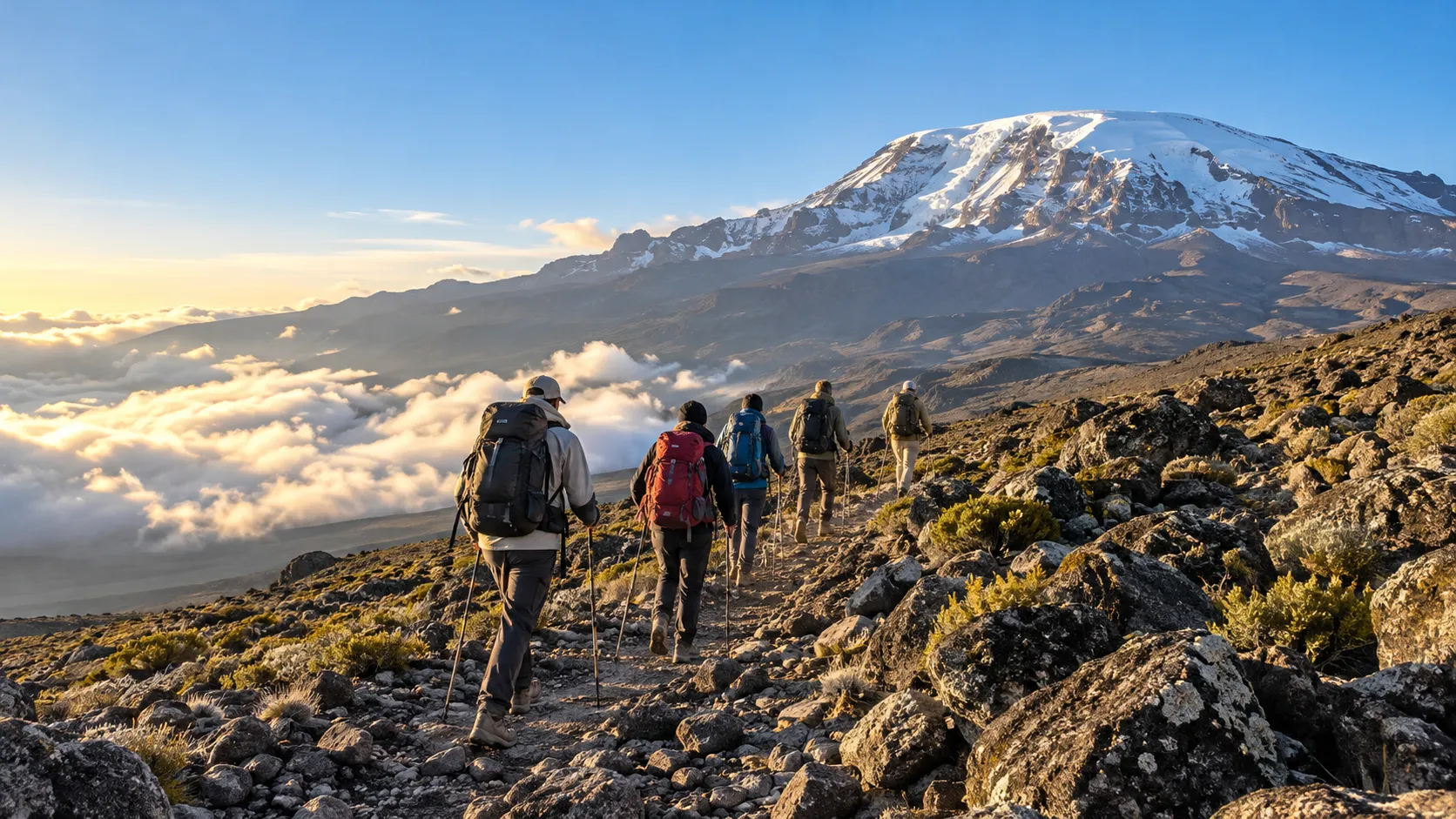
- The path is clear and steady. The trail climbs gently through rainforest, moorland and alpine desert.
- It’s usually shorter. Most climbs take 5 or 6 days.
The main downside is that you go up and come down the same way, so the scenery repeats.
What each stage looks like
- Marangu Gate to Mandara Hut. A walk through thick rainforest. Look out for colobus monkeys.
- Mandara to Horombo Hut. You leave the forest for open moorland with big views and strange giant plants.
- Rest day at Horombo (strongly recommended). A short hike higher, then back down to sleep. This helps your body adjust.
- Horombo to Kibo Hut. Across a bare, rocky saddle between two peaks. It feels like another planet.
- Summit night. You start around midnight, climb slowly in the dark to Gilman’s Point on the crater rim, then on to Uhuru Peak at 5,895 metres. You see sunrise near the top, then walk back down to Horombo.
- Horombo to the gate. A long, happy walk down, and certificates at the end.
Altitude: the real challenge
Most people who don’t reach the top are stopped by altitude, not fitness. Here’s how to give yourself the best chance:
- Choose 6 days, not 5. The extra night at Horombo makes a big difference.
- Walk slowly. Guides say “pole pole”, which means “slowly, slowly” in Swahili. Listen to them.
- Drink plenty of water. Around 3 to 4 litres a day.
- Tell your guide how you feel. Headaches, sickness or confusion are signs to take seriously.
- Talk to your doctor before the trip about altitude medicine.
How fit do you need to be?
You don’t need to be an athlete. But regular walking helps a lot. In the 2 to 3 months before the climb, try long weekend hikes, walking up hills or stairs, and getting used to your boots.
Best time to climb
The driest months are January to early March and June to October. These are the busiest times too. April and May bring heavy rain. The huts on Marangu make wetter months a bit easier, but the trails are muddier.
Pair it with a safari
Many climbers add a few days of game drives after the mountain. Tired legs, a comfy safari vehicle and lions outside the window is a great way to recover. Our Kilimanjaro Marangu Route climb pairs well with Manyara Serengeti Camping or the 7 Days Tanzania safari.
FAQs
Do I need climbing experience?
No. It’s a trek, not a technical climb.
Who carries my bags?
Porters carry your main bag. You carry a small daypack with water, snacks and layers.
How cold does it get?
The summit can drop well below freezing, especially with wind. Good warm layers, gloves and a hat are essential.
Want to talk about your climb? Contact us and we’ll walk you through it.

Recent Posts
Bird Watching in Kenya: Where to Go and What You’ll See