Serengeti, Ngorongoro and Lake Manyara: A First-Timer’s Guide to Northern Tanzania
Serengeti, Ngorongoro and Lake Manyara: A First-Timer’s Guide to Northern Tanzania
If Kenya is where many people take their first safari, northern Tanzania is where a lot of them come back for a second. The parks here are big, wild and full of animals. Three names come up again and again: Lake Manyara, Ngorongoro Crater and the Serengeti.
Here’s what each one is like, and how to fit them together.
Starting point: Arusha
Most northern Tanzania safaris start in Arusha, a busy town near Kilimanjaro International Airport. From here, the parks are lined up to the west, so a road trip flows nicely from one to the next. If you’re coming from Kenya, you can cross by road at Namanga.
Lake Manyara National Park
Manyara is small but full of surprises. You drive through thick green groundwater forest, then out to open grassland by a soda lake at the foot of the Rift Valley wall.
Look out for: Elephants, baboon troops, giraffes, hippos, lots of birds, and if you’re lucky, lions resting in the trees.
Time needed: Half a day to one day. It’s a great first stop to warm up.
Ngorongoro Crater
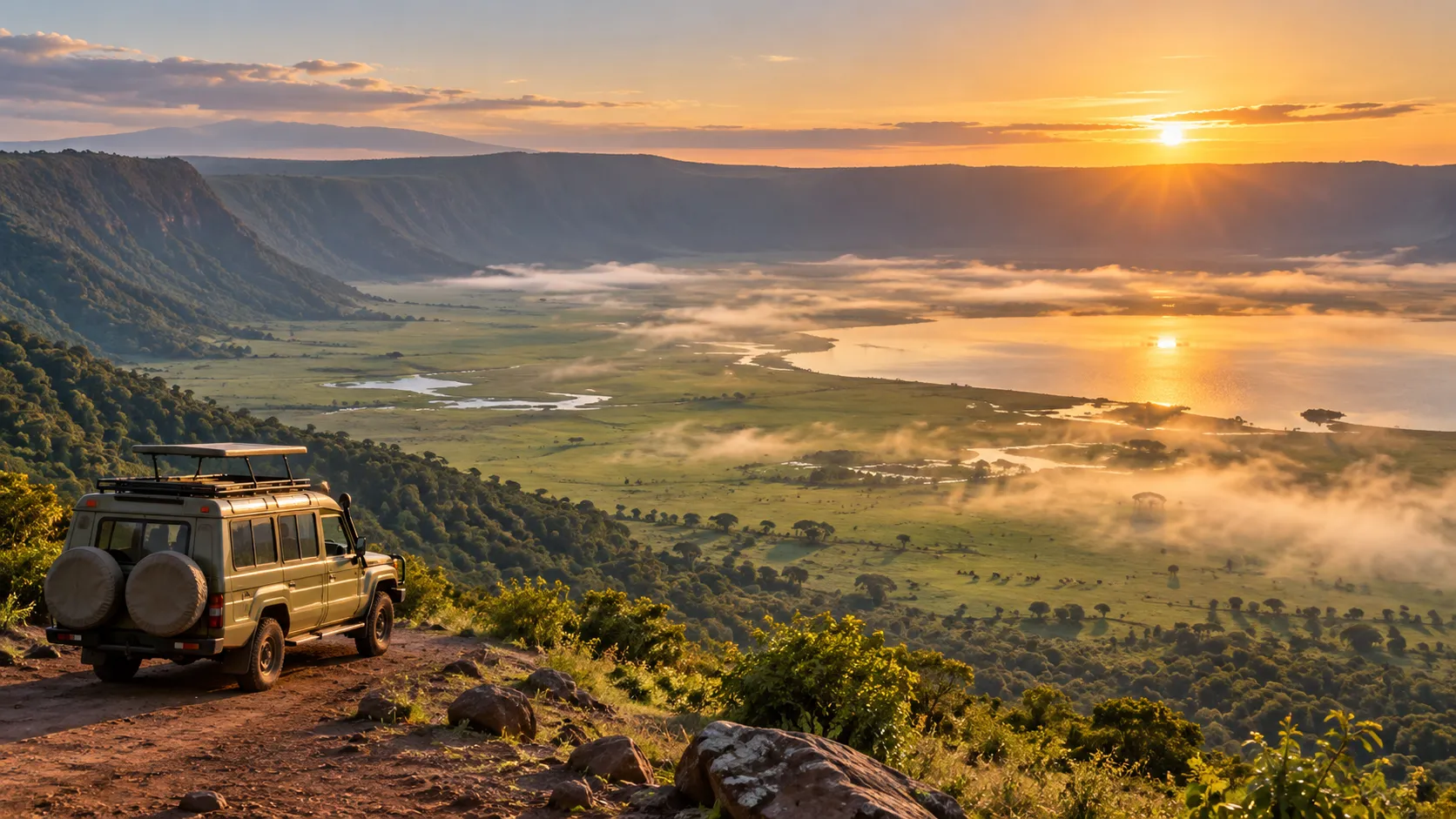
This is one of the most amazing places in Africa. It’s a huge, ancient volcanic crater, with steep walls all around and a flat floor full of wildlife. Driving down the crater wall in the early morning, with mist on the rim, is something guests never forget.
Look out for: Lions, hyenas, buffalo, elephants, zebras, wildebeest, flamingos on the lake, and black rhinos. The crater is one of the best places in East Africa to see rhino.
Good to know: Time on the crater floor is limited, so start early. It can be cold on the rim, so bring a warm layer.
Serengeti National Park
The Serengeti is the big one. Endless plains, granite rock outcrops called kopjes, and huge numbers of animals. It’s also where the Great Migration spends most of the year.
Look out for: Lions, cheetahs, leopards, elephants, giraffes and, depending on the season, the wildebeest herds.
Time needed: At least 2 to 3 nights. It’s a very large park, and you’ll want time to explore.
Where are the herds?
- December to March: Southern Serengeti, calving season
- April to May: Moving through the central areas (rainy season)
- June to July: Western Serengeti, Grumeti River crossings
- July to October: Northern Serengeti and Kenya’s Masai Mara, Mara River crossings
- November: Heading back south
Nature doesn’t follow a calendar, so these are rough guides. Our team keeps track of where the herds are and plans your route around them.
Don’t skip Tarangire
If you have an extra day, add Tarangire National Park. It’s known for big elephant herds and giant baobab trees, especially in the dry season.
How many days do you need?
A good first trip is 6 to 7 days. Our 7 Days Tanzania safari covers the highlights. For a budget-friendly option, try Manyara Serengeti Camping. Want to see Kenya too? The 13 Days Kenya Tanzania trip brings both countries together.
FAQs
Is a Tanzania safari more expensive than Kenya?
Usually yes, because park fees are higher. Camping safaris help keep costs down.
Can I see the Big Five in northern Tanzania?
Yes. Ngorongoro Crater gives you a real chance at all five in one day.
Do I need a visa for Tanzania?
Most visitors do. Apply online before you travel and check the latest rules close to your trip.
Ready to plan your Tanzania safari? Contact our team and we’ll build a route that fits your dates.

Recent Posts
Bird Watching in Kenya: Where to Go and What You’ll See